Wednesday, August 3, 2011

Are there enough scary movies coming out yet?


I swear I've seen 20 trailers for scary/creepy/thriller-type movies that are coming out within the next year.  But something about this one says it's going to be quality (as well as Kevin Smith's move Red State, but that seems to border on badass comedy a lot, at least as far as dialogue goes. Come on, John Goodman's in it.)

From the producer who brought you Jeepers Creepers I and II (as well as The Good ShepherdLost in Translation, and Marie Attoinette - let's be fair) here's Francis Ford Coppola's latest attempt at a masterpiece.

Twixt!

P.S. - Val Kilmer, what happened to you man?!

P.P.S. - In case you wanted to check out Red State:
Official Trailer

Thursday, July 28, 2011

Thank you Perez


Some guys really are a dime a dozen!  So reassuring. Ladies, know any guys that answered these questions? Fit into these percentages? :)

http://fitperez.com/2011-07-28-half-of-men-would-dump-girlfriend-for-weight/?feat=yes

I definitely chuckled and knodded (or shook my head, depending) at a few.

Tuesday, July 19, 2011

That was a HOOT (yeah, I went that corny with it)

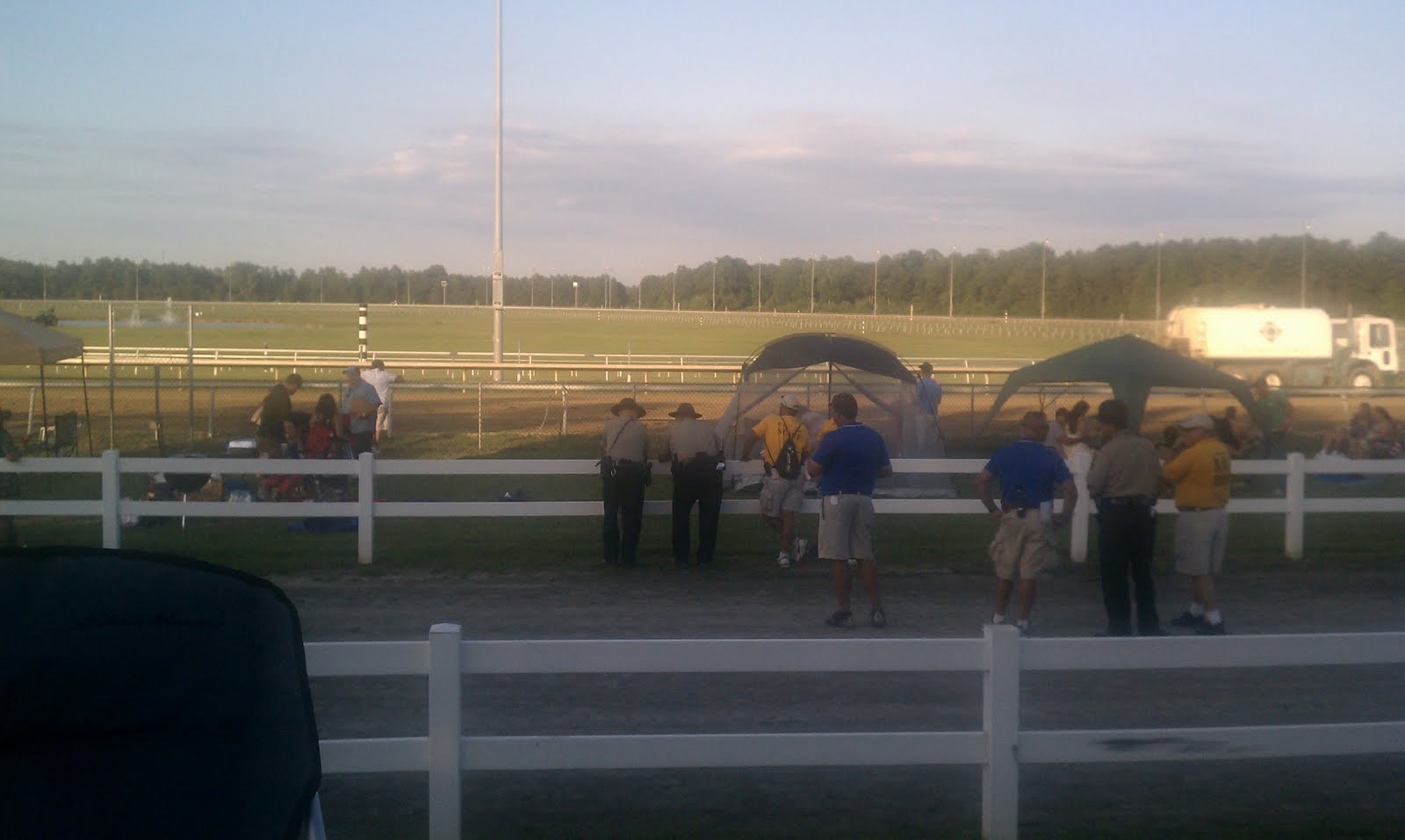
This was my first year going to Hoot on the Hill at Colonial Downs (hosted by the Virginia Ski Club and partially sponsored by Hooter’s and K-95).  I didn’t really know what to expect going into it, and after this experience all I have to say is- unless you like cornhole and drinking in public, it ain’t much. 
It was fun, don’t get me wrong.  If you have enough good people, food, and alcohol around you, you’ll be good to go.  But you can get that a lot of places.  The horses were a little extra excitement, but they mostly kept to the inner tracks for most races, and a lot of people weren’t on the rail so you weren’t even that close when you were watching.
So all that being said, my experience was pretty fun!  There were 10 of us in our group, and our plot had plenty of room for us.  We had a tent, little picnic table, bunch of chairs, coolers, blankets, booze, and bodies!  We didn’t even have a cornhole set with us and we still had a blast.  I guess the girl fight in front of us didn’t hurt. Plus two of our friends entered the hot wing eating contest (or maybe one more jumped in after she found the wings were boneless). They may not have won, but they got Hooters shirts! Lol

So if you’re looking for a more relaxed, watered down version of Strawberry Hill, this event is perfect for you.  Or even if you’re just looking to enjoy some nice weather with a little drinking in public with a few of your friends, I guess it’s worth the $20.  Couldn’t hurt right? At least it didn’t for me.

So much security...for 2 chicks?
I <3 Hooters (the sticker said so)


Yet Another Hadad’s Party!

On June 9th, Rumors Boutique and the crazy kids known as Bitch City Crew threw another fun and eventful shindig out at Hadad’s Lake.  With about 14 kegs, 30 pizzas, and DJ Cobra Krames being “too fucking loud”, everyone had enough fuel to keep them energized for the day (which started at 11:30 for some and lasted into the evening).

Despite an early warning from Rumor’s co-owner Casey Longyear that the police were on their way and would be I.D.-ing everyone in attendance, the 5-0 never showed and (presumably legal) fun was had by all!

See for yourself:


Didn't really have too much to write about this one.  I mean, there was beer, pizza, and music - can you guess what happened next? :)

Wednesday, July 13, 2011

Queso Critic

Best Queso In Richmond (and kind of the surrounding area)

1.       El Caporal
-I’ve thought to myself every time I’ve eaten there “OK, this HAS to be the best queso ever”.  And so it was written.
2.       Casa Grande
-This is a veeerrrrry close 2nd….I mean, it’s the 2nd listed #1 best queso
J lol
3.       Republic
-Believe it or not, for a non-Mexican designated restaurant, their queso is DAMN good
4.       El Paso
-They could tie with Casa really, but I think Republic beats them bc of their non-Mexican restaurant designation.  It’s still damn good queso.
5.       Nacho Mama’s
-It’s a meal in itself.  A delicious meal!
6.       Mexico
-C’mon, if you’re just straight rocking the country’s name, you gotta step up the queso.
7.       La Casita
-Pretty good, but a little blander than the restaurants over in the West End.
8.       Plaza Azteca
-For a pricier Mexican restaurant, I expected more.
9.       Baja
-I know I eat it every week, but even when I put stuff salsa or sausage in it, it’s still….yeah
10.   Legend’s
-….Just don’t get it. It’s yellow for god’s sake.

Thursday, May 19, 2011

Whatchu know 'bout Oregon Hill?


             Oregon Hill is a fascinating, ever-changing neighborhood.  Already rich in Richmond history, it continues to be an important part of the city’s developing history while undergoes changes in its population and dynamic.
In 1968, the Richmond Downtown Expressway razed almost one hundred structures. Virginia Commonwealth University, to the north, has demolished entire blocks of residences.
            The complete demolition of all the houses on a three block area was a source of bitter contention between the neighborhood and the Ethyl Corporation, which owned the land. Ethyl had planned to do more, but had too much resistance from residents.
             “They successfully fought off Ethyl which purchased land and was going to do different things, including put up some apartments, put a research facility, put a theater up at one point,” explained Oregon Hill resident Lynn Ivey.  “They successfully thwarted Ethyl as well as VCU who wanted to start marching towards the river to put up dorms, and basically do the stuff that ultimately ended up doing on Board Street.”
To contrast all the destruction, recently there has been much development throughout Oregon Hill.
Jennifer Hancock is the President of the Board of the Oregon Hill Home Improvement Council (OHHIC), the President of the Oregon Hill Neighborhood Association (OHNA) and a resident of the neighborhood.  She moved into the neighborhood around 2003. 
            “My home was a market rate house built by OHHIC, our local nonprofit,” Hancock said.  OHHIC has been renovating and building workforce housing in the neighborhood since the 1970’s.  “Market rate houses were sold to help OHHIC offset the cost of selling affordable houses at a loss,” Hancock explained. 
            According to Hancock, OHHIC was originally started as a way to help the original families of Oregon Hill to become homeowners after renting for generations, in the face of gentrification.  “When I moved into the neighborhood, this was still very much a concern,” Hancock said.  “Housing prices were climbing.  The assessment on my home went up 28%.”
            “I know that it is hard to remember that time now that we are in a recession, but [Oregon Hill residents] was concerned about people being pushed out of the neighborhood that they had lived in for their entire life.”  OHHIC has been able to help someone of these residents.
Infill projects have erected houses in lots that were previously vacant due to fires or other demolition. Many old buildings have either been renovated or torn down and replaced with townhouses. As of 2007, a new townhouse complex called "The Overlook" has been mostly completed and inhabited on the blocks overlooking the James River.  

Robert Fritzman is one of the residents of The Overlook.  “I mean, I heard it was the ghetto and whenever I tell people where I live, the first face they make is one of shock,” Fritzman said. 

Now that he has been living there almost a year, he’s warmed up to the area, but still has some mixed feelings. “It's a great neighborhood and I love living there; however, I think it's still somewhat a little unsafe. Just last Friday the cops were on my street again because a guy was trying to break into everyone’s cars,” Fritzman said.

“I love the location of Oregon hill and the fact that I am so close to the Fan without paying the price to live in the Fan. I just wish they would spend some time cleaning up the homeless problem and some of the houses.”
            Jennifer Hancock has noticed several issues with an of students and young people.  “Noise and parties are a concern, usually at the beginning of the school year.  After the police get called a few times, they will usually settle down,” Hancock said. 
            As Fritzman pointed out, crime can also be an issue.  Hancock agrees.  “Many of these students have never lived in an urban environment and there is a bit of a learning curve.  Such as don’t leave valuables in plain sight in your car.  Or if you allow anyone to show at your party, you may end up being the victim of a theft.” 
            Hancock pointed out that learning the ins and outs of city living can be a struggle for students.  “What day is trash day?  Recycle day?  Why do they pick up trash in the alley, but recycles on the sidewalk?  Why can’t I leave my recycle bin on the sidewalk 24/7?  My dog/cat is lost.  Help!” 
            She added, “And those of us that have seen the neighborhood change are still trying to learn to live with the students and trying to figure out how to connect with a constantly changing population,” Hancock explained.  “You get one group trained and it’s time for the new group to move in.”
            Any other problems the students are causing?  “Parking. Parking. And, oh yeah, parking.”  Hancock says it’s a common occurrence to have three, four or more students renting or living in a house and each student has a car. 
            She also said commuter students park there because it’s free.  As a result, neighbors are having to park blocks from their houses.
            Hancock had one last thing to add on the topic of students.  “With a large and constantly shifting population, and the loss of many long-time Oregon Hill residents, it can be hard to find volunteers for neighborhood activities.  Students are often not interested.  They don’t feel like it is their neighborhood/home.  They are leaving in a couple of years (although many, to their surprise, end up staying after they graduate).”
            To clarify, Hancock doesn’t feel that the students are necessarily “pushing” the older generations out (as in gentrification). 
“Now that gentrification is no longer a concern, student renters are the big concern.  A neighbor forwarded a study that showed that levels of poverty are rising in OH.  I suspect that the decrease in income levels can be attributed to the students (not because of poverty, although students are often poor, but because they are students.  They have part-time jobs or get money from their parents or student loans.  When they graduate, their incomes should start rising, I hope.  We are in a recession.).  Gentrification is never mentioned anymore.”
But some feel the increase in students may not be such a bad thing.  “It was run down, dirty, slummy, and overall sketchy,” said former Oregon Hill resident Nathan Faison.  “I started noticing that as VCU expanded, more and more college students were pushing out and filling farther and farther reaches of Oregon Hill. It seems that the population shift now has students out-numbering the older lower class inhabitants. Renovations look like they’re having a good impact as well, especially in the backside reaches near the back of Hollywood [Cemetery].”
Besides students, Oregon Hill has its share of characters.  Lynn Ivey remembers Robert Brunk, a “70-something year old man” who would stop people on Laurel Street and make them pay him a dollar to move on, much like a toll.   “He had a red hat and was obviously not completely wired,” Ivey explained.  “He was very tall and very lean and would walk up to the side of your car and go ‘hey buddy, hey buddy, gimme a dollar, gimme a dollar’.” 
Ivey added, “I started keeping dollars in my car just to give him one,” Ivey said.  If you opened your wallet and saw that you had more in your wallet, he’d ask for more.  Ivey isn’t sure if Brunk lived in the neighborhood, but he says he was always around.

The neighborhood retains some of its original architecture and working-class feel, while mixing with newly constructed buildings and the energy of the VCU students and young professionals who may be new to the area.  Oregon Hill is truly a unique neighborhood, holding onto its history while transitioning into the future as a desirable place to live.

Tuesday, April 5, 2011

Look Out Carytown


To quote singer Bob Dylan- “For the times they are a-changin’.”  And they appear to be changing quite dramatically for Richmond’s Carytown area. 
Richmond City Council voted 9-0 at their March 28th meeting to approve a special use permit for a new retail development in Carytown Place on North Nansemond Street.  The council also voted 6-3 to approve a city master plan amendment for the area.  And many in the community are not pleased with the council’s decision.
The controversial master plan amendment called for certain properties along Floyd Avenue, Ellwood Avenue, North Thompson Street and North Nansemond Street to have their designation in the city’s master plan “land use plan” changed from “transitional office” to “community commercial”.

Councilman Bruce Tyler, whose 1st District includes the site in question, began the council discussion at the Monday meeting by pointing out that “this is not a business decision, this is a land use decision.”

Tyler explained that, “The Commonwealth of Virginia provides us with certain rights as a city, and one of those rights is to delegate land issues and land use issues to the city.” 
He said the commonwealth does not delegate to the City of Richmond the right to decide what business goes in a building and which one does not.  “If I have two competing businesses, well it’s not my place to say this one can come in and this one can’t,” Tyler said. 
He also explained that SUP’s have to be decided on according to the criteria set forth by the code in the city’s master plan. “And the criteria’s very clear – it cannot increase congestions, in cannot encroach on other people’s property, it cannot be overdeveloped [to name a few],” Tyler said.  “That’s critical.”

Tyler is for the development, but against changing the master plan to cater to the developer.
            “I just felt it was inappropriate to do it that way,” he said, referring to the changing of the master plan so that this one project could be approved.  “If you don’t do spot zoning, you shouldn’t be able to do spot master planning.”
Zoe Anne Green, a representative from the Museum District Association’s Board of Directors, agrees.  She said the association spent 8 months working with the developer on the plans for this project and “certainly not everyone’s happy, but we feel like we did the best thing for the neighborhood with that property.”
Green said the MDA, which represents the area west of the Boulevard, feels like the planned development is a really good use for a vacant property that is not really suitable for office space.  Green added, “The parking lot is oriented towards Thompson, not Nansemond, so we believe it’s not going to have a lot of impact on the residents on Ellwood and Floyd.”
The MDA voted in November to oppose the SUP, but the developer made several changes and the association then voted to support the altered plans.
However, the association does not feel like the city administration did the right thing by introducing the master plan amendment.  “We would’ve preferred that council voted against that,” Green said, adding, “It’s more on the way it was done than what it was.” 
She said the association feels that there wasn’t enough notice given about the amendment and there wasn’t enough opportunity for public input.  “But we feel they did the right thing on the SUP.”
Hunter Jamerson, attorney at Macaulay and Burtch and representative of Don’t Big Box Carytown, claimed that these plans would violate Virginia Code Section 15.2.22.1.
"Long story short, that code section governs the relationship between localities and the state with regards to transportation planning,” Jamerson explained, adding, “It says that any time [the city is] rezoning an area, and the SUP is a form of rezoning, that is within 3000 ft. of a state controlled highway and it creates a substantial impact on state controlled highway transportation, then you have to report to the Virginia Department Of Transportation (VDOT) with regard to what [the city’s] site plan is so that [VDOT] can review it and determine whether any changes need to be made.”
 In this case, the Carytown Place development is about 1500 ft. away from Interstate 195. If the new development generates more than 250 vehicle trips per day, then a site plan must be given to VDOT.
"It's going to generate traffic in excess of the reporting requirements, so that requires VDOT to study it.”
Jamerson explained that VDOT has a system similar to assigning letter grades to these projects “like A-F and my bet is...these are C level intersections”.  So while the project would not fail, it would require some changes to the existing traffic pattern in order to improve the situation. 
“And those would be things like removing street parking on Ellwood Avenue and that block in order to alleviate the strain, changing some of the one way patterns or signage and little things that,” Jamerson said.
Jamerson wrote a letter to the city council members explaining all of these details, but claims no such report or study has been made.
Supporters and opponents had packed council’s chamber at the March 28th meeting, offering conflicting viewpoints.  A prominent voice amongst those in opposition was the group Don’t Big Box Carytown.
Jamerson said Don’t Big Box Carytown opposed the project in principle on the basis that this was not an appropriate development for the neighborhood.  “I think our basis for [that belief] is [the council] had to amend the city’s master plan to even justify this kind of use in this neighborhood,” Jamerson said. 
He added, “We would have preferred to see this kind of development go on the Boulevard or Broad and Belvidere; somewhere where there’s an appropriate site for these kinds of development.”
As Jamerson put it, “This wasn’t just a ‘not in our backyard’ campaign.” 
Jamerson said the group’s main point was that something along the lines of a mix-use, small retail housing or multi-family housing, like apartments or condos, would have been a much better fit, and “probably would have generated a better product for the local, existing retail.”
“If you build more apartments you create more retail space for the merchants you already have there,” Jamerson explained.  “Instead, they’ve added another grocery store to compete with the existing three.”